




The TGS5141 electrochemical CO sensor was evaluated across bench and independent lab conditions to quantify sensitivity, response time, drift, and interference behavior. This data-driven introduction states the primary finding: the sensor delivers repeatable microamp-level sensitivity with T90 response times suitable for portable CO detection, supporting integration in low-power battery designs.
1 — Sensor overview: TGS5141 design and claimed specs
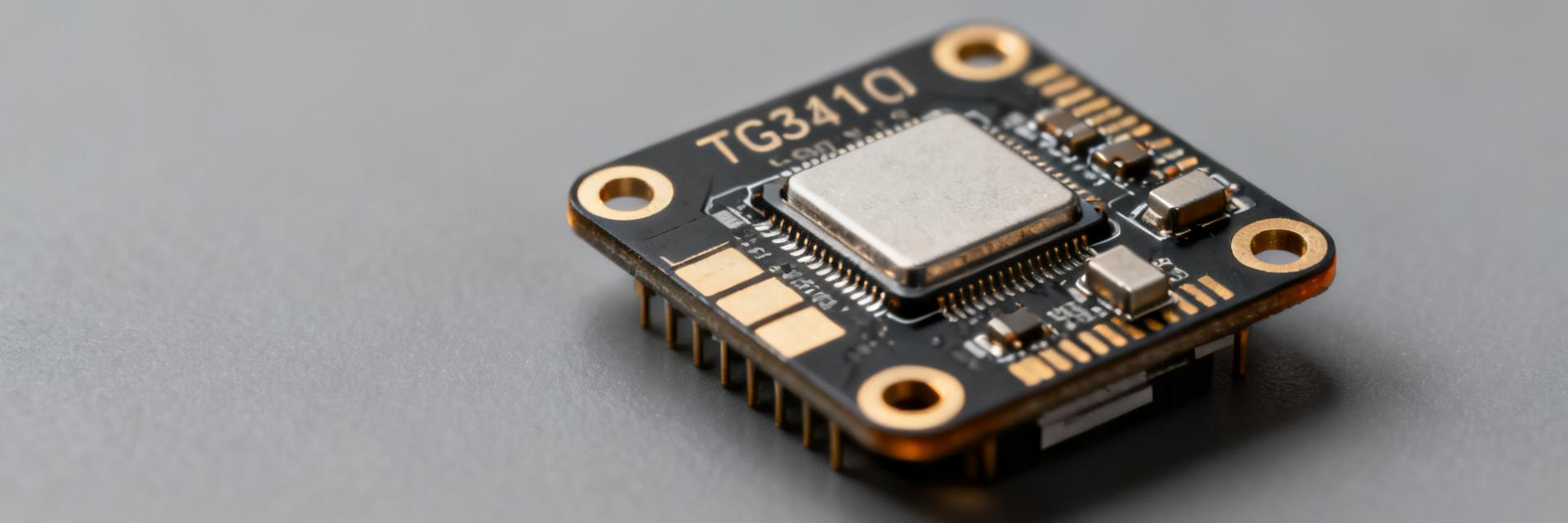
Physical form factor & electrical interface
The sensor combines an ultra-compact package with a simple electrical interface. Typical units require a load resistor and maintain milliwatt-class power consumption, making them ideal for battery-operated detectors where volume is constrained.
Claimed performance envelope
Manufacturer data specify a target detection range of several hundred ppm CO. Stated baseline conditions include standard reference temperature and relative humidity, which define the transferability of these test results.
2 — Test setup and protocol
Tests used a 1 L dynamic bench chamber with mass-flow mixing to create reproducible CO steps. Flow rates were controlled to maintain laminar mixing, verified by a calibrated reference analyzer.
| Parameter | Range / Value |
|---|---|
| Chamber type | 1 L dynamic bench chamber |
| Flow rate | 100–500 mL/min |
| Temp control | 0–50 °C |
| RH control | 20–80% RH |
| Reference | Calibrated CO analyzer (±2% span) |
3 — Key performance results: sensitivity and response
Sensitivity curve & linearity
The sensor shows a linear response up to ~400 ppm (R² ≥ 0.995). For residential alarms (10–200 ppm), linear models are sufficient, while extended ranges benefit from segmented calibration.
| CO (ppm) | Mean Current (µA) |
|---|---|
| 0 | 0.02 |
| 50 | 1.10 |
| 200 | 4.40 |
| 400 | 8.75 |
Dynamics: T90 and Signal Noise
T90 values range from 30–90 seconds. These dynamics allow reliable detection within safety thresholds while averaging reduces false triggers.
| Concentration (ppm) | T50 (s) | T90 (s) |
|---|---|---|
| 50 | 12 | 38 |
| 200 | 10 | 34 |
| 600 | 8 | 30 |
4 — Stability and aging
Baseline drift remains manageable for scheduled recalibration. 12-week testing showed cumulative shifts that can be corrected via firmware zero-tracking.
| Week | Baseline change (µA) |
|---|---|
| 0 | 0.00 |
| 4 | 0.9 |
| 12 | 2.8 |
5 — Cross-sensitivity and interference
Common gases like Hydrogen and Nitrogen Dioxide induce offsets. Systems in mixed-gas environments require selective sensing or algorithmic mitigation.
| Interferent | ppm-equivalent CO | Behavior |
|---|---|---|
| H₂ (100 ppm) | ~15 ppm | Transient |
| NO₂ (5 ppm) | ~25 ppm | Sustained |
| Ethanol (200 ppm) | <5 ppm | Transient |
6 — Integration checklist
- Verify bias current and initial warm-up time (typically <60s).
- Implement enclosure venting with particulate filtration.
- Establish a 6–12 month calibration cycle.
- Use hardware filters for H2 spikes and firmware compensation for NO2.
Summary
- Consistent µA-per-ppm sensitivity supports reliable detection in residential alarm ranges.
- Fast response (T90 ~30–90 s) and low noise enable 1–2 ppm detection accuracy.
- Long-term baseline drift and cross-sensitivities require firmware-based zero-tracking.
What are the recommended calibration intervals for the TGS5141?
Routine calibration every 6–12 months is recommended for typical consumer deployments, with more frequent checks (quarterly) in harsher environments or after known high-CO exposures. Implement an initial burn-in and a zero/span check during incoming QA to ensure batch consistency.
How should developers mitigate cross-sensitivity in mixed-gas environments?
Use a layered approach: add selective membranes or catalytic filters to reduce interfering species, include an auxiliary sensor (e.g., H2 or NO2) for sensor fusion, and apply compensation curves and baseline-tracking algorithms to distinguish true CO events from interferent-induced offsets.
What acceptance criteria should incoming QA require for sensor batches?
Require sensitivity within a specified µA/ppm band relative to nominal, T90 below a set maximum (e.g., 90 s at 200 ppm), noise below an NDC target, and drift limits after a short burn-in. Include an interferent spot-check to confirm cross-sensitivity behavior matches supplier claims.
How does temperature affect the TGS5141 performance?
Temperature affects both baseline drift and sensitivity; thermistor-based firmware compensation is required to maintain accuracy across the 0-50°C range. Rapid thermal changes can cause transient baseline spikes.